
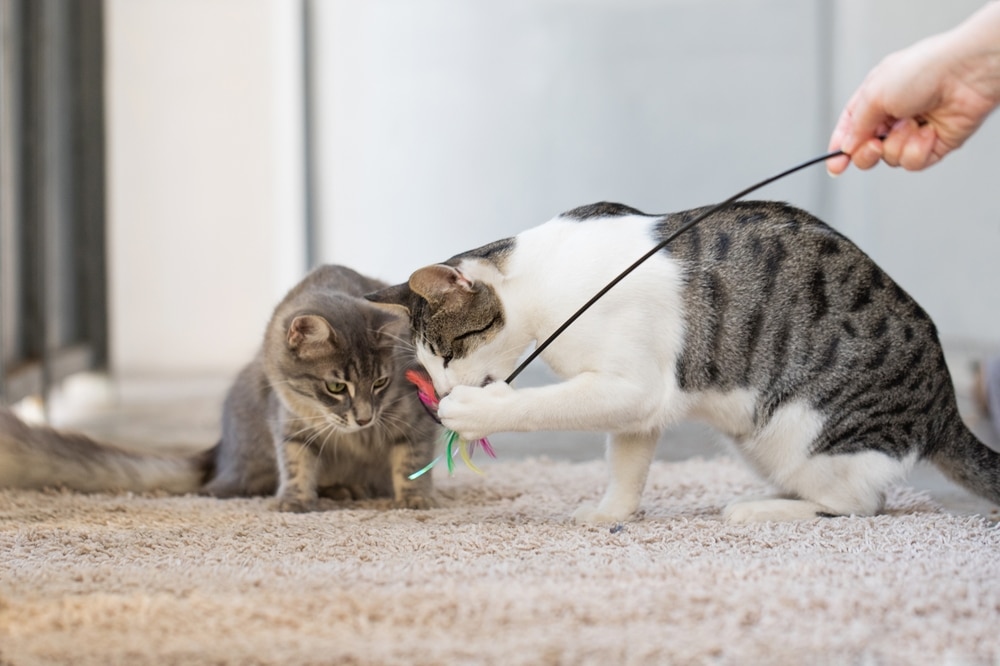
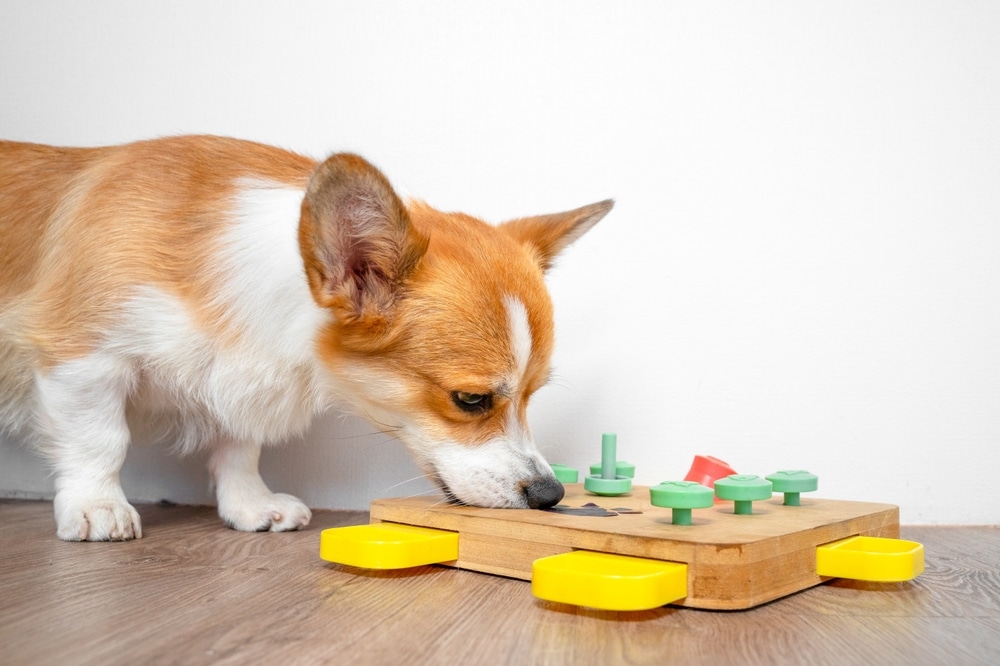
Real enrichment for your dog or cat does not require a single store-bought puzzle, because a muffin tin with tennis balls covering kibble, a cardboard box stuffed with crumpled paper, or a paper towel tube folded shut around a few treats works just as well as a thirty-dollar feeder. Enrichment is the practice of letting your pet use their brain and their nose to earn meals or treats instead of inhaling them from a bowl. The store-bought options are convenient but entirely optional. What matters is that your pet gets the chance to sniff, problem-solve, and slow down, and household materials handle that beautifully.
Our Fear Free approach matters most when behavior, mealtime, and at-home habits come up, so wellness and preventative care visits at Cane Bay Veterinary Clinic in Summerville are a natural time to ask about enrichment ideas that fit your pet’s personality and your home. We can talk through which DIY puzzles suit a fast eater, a senior cat, or a young dog who needs more to do, and we factor mental stimulation into the bigger picture of weight, dental, and behavioral health. If you have questions about getting started or your pet has changed how they eat, request an appointment and we will work through it together.
What Matters Most
- Enrichment means letting your pet sniff and problem-solve for food instead of eating from a bowl, and the most effective tools cost little to nothing.
- Mental work tires a pet in a way physical exercise cannot, so even a well-walked dog or a busy cat still needs something to think about.
- Muffin tins, egg cartons, toilet paper rolls, cardboard boxes, and old fleece become puzzle feeders, snuffle mats, and nose-work games in a few minutes.
- Start easy, supervise cardboard chewers, and add difficulty gradually so your pet stays curious rather than frustrated.
Why Does Mental Stimulation Matter As Much As a Walk?
Mental work produces real, measurable fatigue: a pet who solves a puzzle or follows a scent trail comes away calmer and more satisfied than one who only ran around the yard. A dog can be physically exercised to the point of a wagging tail and still be bored an hour later, because the thinking part of the brain never got used.
That gap shows up as behavior. A round of brain games can leave a dog more genuinely tired than a long walk, which is why a physically exercised but mentally understimulated dog still finds trouble to get into: the shredded couch cushion, the counter-surfing, the barking at nothing. Cats do the same in their own way, redirecting an unmet hunting drive into 3 a.m. zoomies or ambushing your ankles. The stalk-chase-pounce hunting behavior that drives cats does not switch off indoors, and puzzle feeders give that instinct somewhere to go.
This matters most for indoor pets and on the days when a real walk or long play session is not happening: rain, heat, a busy work stretch, a recovering pet on limited activity. Dogs are wired to forage for food, and cats are built around a full hunting sequence, so both species do best when meals give them a little something to work for. We fold mental stimulation into preventative care because a bored pet is often a heavier, more anxious, or more destructive pet, and enrichment quietly helps with all three.
What DIY Puzzle Feeders Can I Make for My Dog?
The most impactful and accessible dog enrichment is food-based: puzzles that make your dog think their way to a meal while slowing down how fast they eat. That combination pays off twice, giving the brain a workout and giving a fast eater’s stomach a break from the “scarf my dinner in thirty seconds” routine. Nearly any difficulty level can be built from things already in your kitchen. The dog who inhales dinner doesn’t give their stomach enough time to transmit the “I’m full” hormones to the brain, leaving them still feeling hungry after a meal. Stretching that meal to a few minutes of sniffing and nudging is easier on digestion, helps them actually feel like they’ve eaten, and is much more fun for them.
Which Easy DIY Food Puzzles Work Best?
You can build a whole rotation from the recycling bin and a drawer. Muffin tins topped with tennis balls, rolled towels with kibble tucked into the folds, and stuffed cardboard tubes are the backbone of DIY cognitive toys you can assemble in minutes. A few reliable starting points:
- Muffin tin puzzle: Easy mode. Drop kibble into the cups and cover each one with a tennis ball so your dog has to nose the balls off.
- Rolled towel: Moderate difficulty. Scatter kibble along a hand towel, roll it up, and let your dog unroll and sniff it out.
- Egg carton feeder: Moderate to hard. Tuck food into the cups and close the lid for an easy shred-and-forage puzzle.
- Cardboard tube: Moderate to hard. Fold one end of a paper towel tube, add treats, and fold the other end shut.
- Large plastic bottles: Difficulty can scale. 2-liter soda bottles work great for this; cut small kibble-sized holes and they can roll it or pick it up and throw it around to dispense kibble. Smaller holes = more work.
- Frozen treats: Easy but time consuming. Freeze broth or a little wet food in an ice cube tray for a long-lasting summer project.
- Cardboard box with packing paper: Easy but time consuming. Save up those giant boxes and layers of packing material; scatter kibble in the different layers so they can sniff it out. Add some cardboard tubes in the mix for extra fun.
The beauty of puzzle toys on a budget is that difficulty scales for free: bury the kibble deeper or add a layer, and the same egg carton goes from easy to genuinely challenging. Keep two rules in mind. Every material should be safe if a piece gets swallowed, and any cardboard-based puzzle needs supervision, because some dogs decide the box is the snack. For dogs, novelty is the currency. Rotate which toys are out, so half disappear for a week and come back “new.”
How Do I Make a Snuffle Mat, and Why Do Dogs Love Them?
A snuffle mat is a shaggy fleece mat that hides kibble deep in its folds, forcing your dog to hunt for every piece by nose. Because scent work lights up so much of the canine brain, a few minutes of snuffling produces the kind of cognitive fatigue a walk rarely does. Learning how to make a snuffle mat takes nothing more than a rubber mat with drainage holes and strips of fleece, and one washable, reusable mat gives you months of enrichment. If you would rather skip the craft project entirely, scatter feeding does the same job for free: toss a handful of kibble across the grass and let your dog vacuum it up, nose down, one piece at a time. Same olfactory workout, zero materials.
What Scent Work and Nose Games Can I Play With My Dog?
Dogs read the world through their nose, so scent games are deeply rewarding and genuinely tiring, with no equipment needed. Hide treats around a room and cue “find it,” set up a shell game with overturned cups, or tuck a treat in the corner of a cardboard box for your dog to sniff out. Hide and seek is a big hit with many dogs; have someone sit with your dog on the opposite side of the house, and hide yourself in a closet or under a bed. Finding you is all the reward they need.
Simple scent games played with cardboard boxes or overturned cups settle an anxious dog just as well as they occupy a bored one, which is worth remembering on a stormy evening or after a stressful day. Giving a worried dog a job for their nose is one of the gentlest ways of reducing fear and stress at home. Outdoors, the same idea scales up: scatter a meal in the grass, or hide treats in a small pile of leaves and let your dog dig them out. For a longer list of ideas to work through, this roundup of enrichment ideas keeps the games coming.
What Is a Sniffari Walk, and How Do I Do One?
A sniffari is a walk built entirely around your dog’s nose instead of your pace or your step count. You slow down, loosen the leash, and let your dog choose where to go and how long to linger at each fascinating patch of grass, fence post, or mailbox. The point is scent, not distance, and the mental payoff is enormous.
It sounds almost too simple to count as enrichment, but a proper sniffari walk taps the same scent-driven part of the brain that makes snuffle mats and nose games so tiring. A dog working through the layered smells along a single hedge is reading a running newspaper of who passed by, when, and how they were feeling, and all of that processing is real cognitive work. Ten unhurried, sniff-heavy minutes can leave a dog more satisfied than a brisk half-hour march where they never got to stop and read anything.
A few things make a sniffari work:
- Use a longer leash in safe spots: A 10- to 15- foot line in an open, low-traffic area gives your dog room to follow their nose without pulling. Skip the long line near roads.
- Let your dog set the route and the pace: Their job is to sniff, and yours is to follow. Resist the urge to hurry them along to the next thing.
- Pick sniff-rich, quiet places: A calm Summerville sidewalk, a park edge, or a shaded wooded trail beats a busy street where you are managing traffic instead of relaxing.
- Budget a little time: Even one leisurely sniffari a few times a week is a genuine mental workout, and it is a lifesaver on days when you are short on energy.
Sniffaris are especially good for anxious, reactive, or recovering dogs, since sniffing is naturally calming and lets a nervous dog decompress on their own terms. For a dog on limited activity after an illness or injury, a slow, short sniff walk delivers real mental stimulation without the physical strain of a full workout, which makes it a gentle way to keep their mind busy while their body rests.
How Do I Make Puzzle Feeders and Enrichment Toys for My Cat?
You can turn toilet paper rolls, egg cartons, muffin tins, paper bags, and shoeboxes into puzzle feeders that make your cat work for every bite, and many of the best ones cost nothing. Cats are solitary hunters wired for a full stalk-chase-catch-kill-eat sequence, and many indoor cats are more understimulated than their famous independence lets on.
Cats are the ones who usually get left out of the enrichment conversation, partly because a cat dozing on the windowsill looks so convincingly content. A sunny window perch with a bird feeder hung outside the glass for live “cat TV,” a sensory bin of leaves or safe objects, and a plain cardboard box can all make their life more exciting.
What Household Items Make Good Cat Puzzle Feeders?
Your recycling bin is a cat enrichment store. Toilet paper rolls, egg cartons, and a cardboard box with paw-sized holes become homemade puzzles that cost nothing and make a cat work for every bite. A quick starter set:
- Toilet paper roll feeder: Fold in the ends around a few kibbles so your cat has to bat and paw it open.
- Egg carton puzzle: Tuck food into the cups for a gentle paw-reach challenge.
- Muffin tin with bottle caps: Drop kibble in the cups and set clean bottle caps on top to nudge aside.
- Paw-reach box: Cut paw-sized holes in a shoebox and hide kibble or a toy inside.
- Paper bag foraging: Scatter a few kibbles in a paper bag for crinkly, satisfying hunting.
- Plastic bottles: Cut small holes, fill with kibble, and let them roll it around as a snack dispenser.
You can dial the difficulty of DIY enrichment toys up or down by shrinking the holes or stacking layers, though any cat who tends to shred cardboard should only play under supervision. Kittens especially benefit from starting early, and building good habits in a kitten around working for food now heads off the bowl-gulping and boredom behaviors that are much harder to unwind later. A wider set of feline enrichment ideas helps when your cat solves your first few too quickly.
Does Scent Enrichment Work for Cats Too?
Scent-based enrichment satisfies cats every bit as much as dogs, and it takes almost nothing to set up. Paper bags (especially those that smell like the takeout you had delivered), boxes, and crumpled paper moved to new spots each day turn into nose work for cats that is every bit as satisfying as a dog’s scent hunt. Rotating the location is the trick: a box that has sat in the same corner for a week is invisible, but move it by the window and it becomes brand new.
Then there is the classic. Response to catnip is written into a cat’s genes, so the roughly one in three who shrug at it will often light up for silvervine or valerian instead. If your cat has always seemed unimpressed by the catnip mouse, that is not a defect, just genetics.
Bring in objects from outside (make sure it’s not a potentially toxic plant, first): pinecones, leaves, sticks, and feathers can all add enrichment to an indoor cat’s life. Safely enclosed outdoor time counts too. Screened-in catios or harness-training give an indoor cat safe access to fresh air, birds, and breezes, and a DIY build keeps this one of the higher-value low-cost investments you can make.
Is Training Really a Form of Enrichment?
Training is one of the most cognitively demanding activities you can offer either species, and it is completely free. Sustained attention, problem-solving, and the confidence that comes from figuring out what earns a reward add up to serious mental work, which is why a dog who learns a new trick is often as tired afterward as one who ran a mile.
For dogs, a few short sessions a day beat one long one: five focused minutes of learning something new engages the brain far more than an hour of repeating a command they already know. Reward-based, positive training is also enrichment your dog looks forward to rather than dreads. Cats get overlooked here entirely, and they shouldn’t. Cat training works beautifully when sessions are short, voluntary, and paid in something your cat actually wants, whether that is targeting your hand, sitting on cue, or coming when called. If you want a plan tailored to your specific pet, our team can point you toward starting points that fit their temperament.
How Do I Keep DIY Enrichment Safe?
Safe DIY enrichment comes down to two habits: choosing materials that will not hurt your pet if a piece is chewed or swallowed, and matching supervision to the individual animal in front of you. A gentle nibbler can be trusted with a cardboard puzzle unattended; a determined shredder cannot, and neither can a pet who tends to gulp things down.
A few guidelines carry across everything:
- Skip risky materials: Avoid string, small parts, staples, plastic that cracks into sharp pieces, and anything toxic like certain glues or treated cardboard.
- Supervise cardboard, fabric, and paper: Great enrichment, but not for pets who eat what they destroy; step in before the box becomes a meal.
- Size the pieces: Kibble and treats should suit your pet, and puzzle openings should not trap a paw or a nose.
- Match difficulty to skill: Start easy so your pet wins early, then raise the challenge gradually; a puzzle that is too hard leads to frustration, not a workout.
- No essential oils for scent games: Many are toxic to pets, and not worth the risk.
If your pet swallows part of a puzzle and starts vomiting, straining, or acting off, that is a call-us-now situation, and we offer same-day care when something is wrong during our regular hours; please call ahead so we can be ready. Outside our hours, head straight to the nearest veterinary emergency hospital.
Frequently Asked Questions About DIY Pet Enrichment
How much enrichment does my pet actually need each day?
There is no strict quota, and even one short daily activity makes a real difference. Feeding at least one meal through a puzzle or snuffle mat, plus a few minutes of nose work or training, covers most pets nicely. Consistency matters more than volume.
Watch your individual pet, too. A young, high-drive dog or a bored indoor cat may want more, while a mellow senior may be content with a gentle puzzle at dinner.
My dog destroys every DIY puzzle in seconds. What should I do?
A fast destroyer is usually telling you the puzzle is too easy, not that DIY has failed. Move to sturdier setups like a snuffle mat or a muffin tin with tennis balls, layer the food more deeply, and always supervise cardboard so a shredded box does not become an eaten one. Some enthusiastic chewers simply need non-cardboard options, and that is completely fine; the goal is a worked brain, not a survived box.
Are DIY puzzles safe for kittens and puppies?
Yes, with supervision and appropriately sized pieces. Young animals are curious and mouthy, so start with simple, low-risk setups like a paper bag with a few kibbles or a shallow muffin tin, and stay in the room while they figure it out. Skip small parts and anything a puppy or kitten could swallow whole, and keep sessions short and rewarding.
Starting an Enrichment Routine Without Spending a Thing
Effective enrichment really does not require buying anything. Pick one or two activities that fit your pet and your week, a snuffle mat at breakfast, a shell game before dinner, and watch how your pet responds, then build a varied routine from there. Rotating a handful of homemade puzzles keeps the novelty alive without spending a dollar.
If your pet is dealing with anxiety, food-gulping, weight concerns, or behavior changes, enrichment is one piece of a bigger picture, and we are glad to help you sort out the right mix. Reach out to book a visit at Cane Bay Veterinary Clinic and we will tailor a plan to your pet’s personality, health, and home.





Leave A Comment