
Effective Dental Routines Using Brushes, Wipes, and Gels
You are snuggled on the couch with your dog when a wave of bad breath hits you, and suddenly that neglected toothbrush in the bathroom cupboard feels a little more important. Or maybe you have stared at the overwhelming array of dental products at the pet store and walked away empty-handed because you had no idea where to start- or wondered if they’re all just a waste of money. If you have ever questioned whether brushing your pet’s teeth or giving dental chews is really worth the time and cost, you are not alone.
Here is the encouraging news: consistent home care paired with professional cleanings does make a real difference in preventing dental disease and keeping pets comfortable. The key is finding an approach that works for both you and your pet. There is no one “right” way to do it- but there are products and techniques that are better than others.
At Cane Bay Veterinary Clinic in Summerville, South Carolina, we help pet owners develop realistic dental care routines that fit their lifestyles. Our team can demonstrate proper technique, recommend effective products, and create individualized plans. If you are ready to get started or want guidance on your current routine, please request an appointment to discuss your pet’s dental health.
Why Does Dental Home Care Matter?
Periodontal disease affects the majority of dogs and cats by age three. It starts when plaque, a sticky film of bacteria, accumulates on teeth. Within days, plaque hardens into tartar that cannot be brushed away. The bacteria in plaque and tartar trigger inflammation, which progresses from gingivitis to gum recession, bone loss, and eventually tooth loss.
The damage does not stop at the mouth. Chronic oral infection and inflammation have been linked to problems affecting the heart, kidneys, and liver. Pets with advanced dental disease often experience significant pain, even when they continue eating normally.
Daily or frequent home care slows this progression significantly by disrupting bacterial buildup before it hardens from plaque into tartar. But home care complements rather than replaces professional dental cleanings under anesthesia. Think of it this way: home care extends the time between professional cleanings and helps maintain the results of those cleanings. The better home care you can provide, the fewer dental cleanings and tooth extractions your pet will need in their lifetime compared to getting no home care at all.
What Is the VOHC Seal and Why Does It Matter?
Walk down the pet aisle at any store and you’ll see dozens of products claiming to clean teeth, freshen breath, or prevent tartar. But how do you know which ones actually work? That’s where the Veterinary Oral Health Council comes in.
The VOHC is an independent organization that evaluates pet dental products- including treats, chews, water additives, and toothpastes- to determine whether they actually do what they claim. Products that meet their standards for reducing plaque or tartar earn the VOHC Seal of Acceptance, which appears right on the packaging.
Here’s why this matters: unlike human dental products, pet dental products aren’t required to prove they work before hitting store shelves. Manufacturers can make all sorts of claims without any testing to back them up. The VOHC seal tells you that a product has been evaluated through actual trials and demonstrated measurable results. You can also trust that it’s free of potentially harmful, untested ingredients.
When shopping for dental products, look for:
- The VOHC Seal of Acceptance on the packaging
- Whether the product is approved for plaque reduction, tartar reduction, or both
- Products specifically tested on dogs or cats (they’re evaluated separately)
Not every effective product has the seal- the testing process is voluntary and can be expensive for manufacturers. But when you see it, you can feel confident that the product has real science behind it. It takes some of the guesswork out of choosing products that will actually benefit your pet’s oral health rather than just making their breath smell better temporarily.
Toothbrushing: The Gold Standard
Why Brushing Works Best
Mechanical removal of plaque through brushing disrupts the bacterial biofilm before it can harden into tartar. Daily brushing provides the best protection, but even brushing every 2-3 days offers meaningful benefits. Consistency matters more than perfection. Even partial brushing helps, and some home care is always better than none.
Getting Started with Brushing
Introducing toothbrushing requires patience and a gradual approach. Cooperative care techniques help pets learn to accept handling without stress.
Here is a step-by-step approach:
- Touch the muzzle and lips while offering treats and praise
- Lift the lips to touch teeth and gums without a brush
- Introduce pet-safe toothpaste on your finger, letting them taste it
- Add a brush or finger brush with toothpaste
- Build duration slowly over days to weeks
Keep sessions short and positive. If your pet becomes stressed, stop and try again later. The goal is creating good associations, not forcing compliance.
Never use human toothpaste. It contains fluoride and foaming agents that are harmful to pets. Pet-specific enzymatic toothpastes are designed to be swallowed safely and come in flavors like poultry and seafood that most pets enjoy.
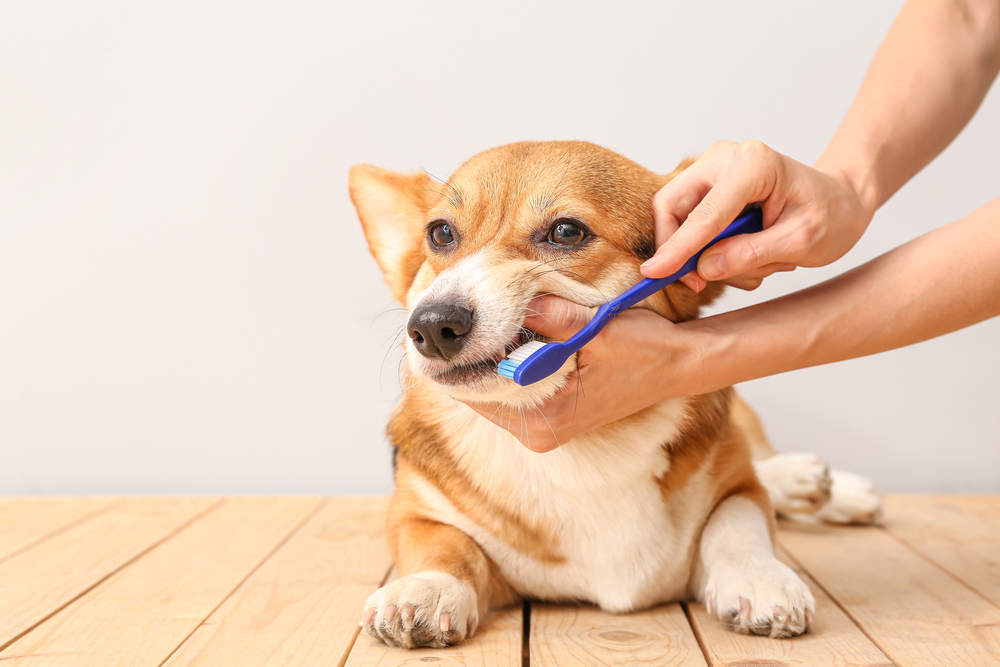
Brushing Technique for Dogs
Brushing dog teeth effectively requires attention to positioning and technique:
- Position your dog comfortably, either sitting beside you or with their back against your chest
- Hold the brush at a 45-degree angle to the gumline
- Use gentle circular motions along the outer surfaces of the teeth
- Focus on the cheek side where plaque accumulates most heavily
- Work systematically from front to back on each side
- Pay special attention to the canines, large premolars, and molars in the back
Most dogs tolerate brushing well once they are accustomed to it. Some actually enjoy the attention and the tasty toothpaste. CET makes a great dog toothbrush with a variety of toothpaste flavors.
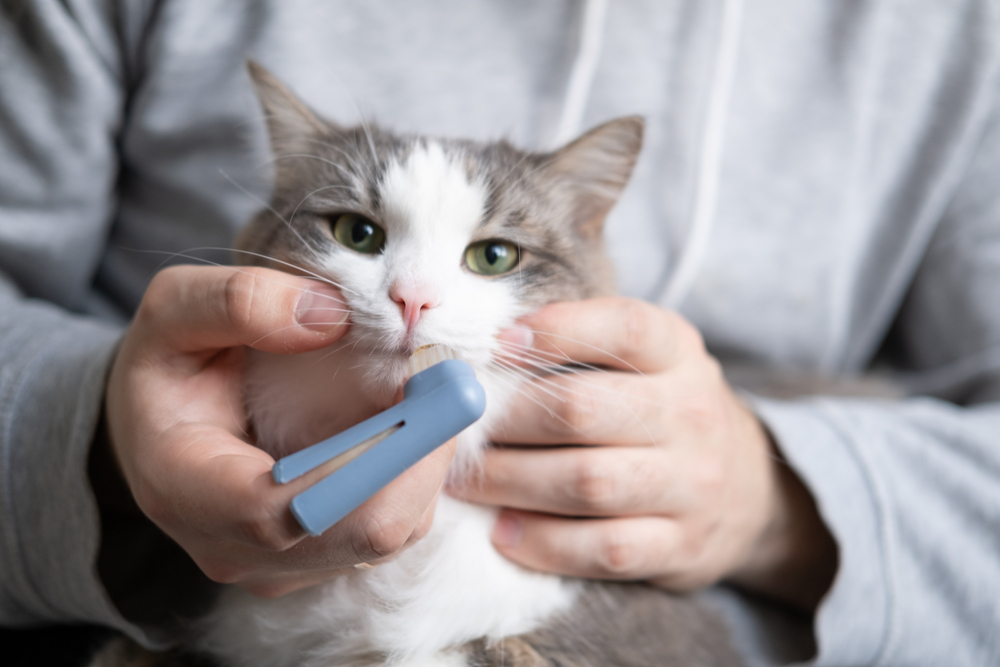
Brushing Technique for Cats
Brushing cat teeth presents unique challenges due to their smaller mouths and general opinions about being handled:
- Work with your cat in a comfortable, secure position
- Use a finger brush or very small soft-bristled brush
- Lift the lip gently and focus on outer tooth surfaces
- Keep sessions brief since cats have shorter tolerance for this sort of thing
- Watch body language and stop before stress escalates
Many cats never fully embrace brushing, but some become surprisingly cooperative with patient, gradual introduction. CET makes a smaller, cat-specific toothbrush with seafood flavored toothpaste!
Dental Wipes and Gauze: Alternatives for Reluctant Pets
For pets who simply will not tolerate a toothbrush, dental wipes or gauze wrapped around your finger can serve as alternatives. They remove surface plaque through friction, though they may not reach the gumline or back teeth as effectively as brushing.
Tips for using wipes effectively:
- Focus on the outer surfaces of the front teeth and canines
- Use a fresh section of the wipe or gauze for different areas
- Pair wipes with enzymatic solutions for added benefit
- Be patient and work up to longer sessions gradually
Wipes are better than no home care at all. For some households, they become the long-term solution. For others, they serve as a stepping stone toward accepting brushing. Check out these Vetradent Dental Wipes as a great way to provide dental care if brushing isn’t an option.
Dental Gels, Powders, and Enzymatic Products
Enzymatic gels and pastes work by breaking down plaque chemically. Some products are designed to be applied directly to the gumline, while others can simply be licked by the pet or sprinkled on food.
Enzymatic products provide benefit even without mechanical brushing, though combining them with brushing or wipes maximizes effectiveness. Look for products containing enzymes that target bacterial biofilm, like OraVet Plaque Prevention Gel and PerioSupport Dental Care Powder. PerioSupport Powder has been shown to decrease plaque by 20% in just a month of regular use, and it tastes great!
These products support oral health but work best as part of a broader routine. They should not be considered a complete substitute for mechanical plaque removal.
Water Additives and Oral Rinses
Water additives and oral rinses claim to reduce plaque and freshen breath by delivering antimicrobial or enzymatic ingredients throughout the mouth. They are easy to use since you simply add them to your pet’s water bowl daily.
However, effectiveness varies widely by product. Things to keep in mind:
- Introduce additives gradually to ensure your pet continues drinking normally; ask us if your pet has kidney disease or urinary tract disease before using these.
- Additives alone cannot remove existing tartar
- They supplement but do not replace mechanical cleaning
- Some pets refuse to drink water with additives, so palatability varies
Water additives can be useful for pets who resist all other home care methods, but they work best as one component of a comprehensive plan. We love Vetradent water additives to help disrupt the bacterial biofilm on teeth.
Dental Diets
Dental diets are specially formulated foods designed to help prevent dental disease. They work through both their ingredients and the physical structure of the kibble.
How dental diets help:
- Larger kibble size encourages chewing rather than swallowing whole
- Texture is designed to scrape plaque from tooth surfaces
- Some formulas contain ingredients that reduce tartar formation
- Fiber matrix may provide mechanical cleaning action
Dental diets are another tool for extending time between professional cleanings, but they are not a replacement for brushing or professional care. They work best when combined with other home care strategies. Ask us which dental diets we’d recommend for your pet- we have several in our pharmacy.
Dental Chews and Toys
Certain chews and toys support oral health through chewing action that mechanically scrapes plaque from tooth surfaces. However, not all chews are created equal, and some can actually damage teeth.
Choosing Safe and Effective Chews
The most important rule: avoid items harder than a fingernail. Dangerous chew items that can fracture teeth include:
- Antlers
- Bones (cooked or raw)
- Hard nylon toys
Instead, choose safe chew toys that bend or give slightly under pressure. Dental chew toys are designed to be effective without risking tooth fractures, and some can be coated in toothpaste or enzymatic gels to increase their effectiveness.
Edible dental chews are designed to keep your pet chewing happily while coating their teeth in biofilm-disrupting enzymes. They work best if given daily- but they only work if your pet chews them. If they chomp and swallow them in two bites, you’re wasting your money.
When selecting dental chews:
- Match the size to your pet (too small creates choking hazards)
- Supervise chewing sessions
- Watch for signs of gastrointestinal upset
- Rotate products to maintain interest
- Look for the VOHC seal of acceptance
Our team loves OraVet Dental chews– they are VOHC approved to clean teeth and prevent future plaque buildup. Please note: some pets will have green stool after eating these- and that’s normal, so don’t worry!
What Home Care Cannot Replace
Even the most diligent home care cannot remove hardened tartar or address disease below the gumline. That is why professional dental cleanings under anesthesia remain essential.
Anesthesia-free dental risks are significant. Without anesthesia, thorough cleaning below the gumline is impossible, dental radiographs cannot be taken, and painful procedures cannot be performed safely. Awake cleanings address only cosmetic concerns while missing the disease that matters most- while stressing out your pet.
Professional cleanings and home care work together:
- Professional cleanings remove tartar and address disease below the gumline while your pet is safely asleep and pain-free
- Home care slows plaque accumulation between cleanings and decreases the amount of bacteria in the mouth
- The combination extends the time between procedures while maintaining both oral and full-body health
The frequency of professional cleanings depends on breed, age, and individual oral health. Our preventative care approach includes dental assessments to determine what your pet needs.
Building a Sustainable Routine
Making dental care a consistent habit requires realistic expectations and practical strategies:
- Pair it with existing routines like bedtime or after meals
- Start slowly and celebrate small wins
- Involve the whole family so responsibility is shared
- Adjust your approach based on what your pet tolerates
- Track improvements like fresher breath and healthier-looking gums
Progress takes time. Any home care is better than none. If brushing every day feels impossible, start with dental chews and enzyme powders or water additives. Find what works for your household and stick with it.
FAQs
How often should I brush my pet’s teeth?
Just like with humans, daily brushing provides the best protection. If daily is not realistic, aim for at least three to four times per week. Even brushing a few times weekly is better than not brushing at all.
What if my pet absolutely refuses brushing?
Some pets never accept brushing despite patient training. In those cases, combine wipes, gels, water additives, dental chews, and dental diets to provide as much benefit as possible. Professional cleanings become even more important for these pets.
Are dental treats enough on their own?
Dental treats help but are not sufficient on their own. They work best as part of a comprehensive plan that includes mechanical plaque removal through brushing or wipes.
How do I know if a product actually works?
Look for the VOHC (Veterinary Oral Health Council) seal of acceptance. Products with this seal have been tested and proven to reduce plaque or tartar.
Your Partner in Dental Health
Effective home care combined with regular professional cleanings gives your pet the best chance at lifelong dental health. Every effort you make, whether it is brushing, wipes, chews, or additives, contributes to a healthier, more comfortable life.
Our Fear Free certified team is ready to help you navigate product selection, demonstrate proper technique, and create an individualized plan that fits your pet’s needs and your lifestyle. Our online pharmacy has a great selection of our favorite, vet-trusted, scientifically-proven dental products.
Ready to build a dental care routine that works? Contact us to schedule a dental consultation or exam. Together, we can assess your pet’s current oral health and create a plan for keeping those teeth healthy for years to come.



Leave A Comment