
Hair Loss in Dogs and Cats: Is It a Skin Problem or a Hormone Imbalance?
Hair loss in dogs and cats tends to raise more questions than it answers. Is it the thyroid? A skin infection? Allergies? Stress? The frustrating reality is that two pets with nearly identical bald patches can have completely different underlying causes, and treating one as if it were the other rarely ends well. Getting to the root of alopecia requires looking at the whole picture: where the hair loss is occurring, what the skin looks like underneath, what else has changed, and what the bloodwork and diagnostics reveal.
Cane Bay Veterinary Clinic in Summerville is the area’s only Fear Free Certified Practice, and our approach to cases like hair loss reflects exactly that philosophy: thorough, calm, and built around what each individual pet actually needs. Our diagnostic services include in-house lab work, digital X-rays, cytology, and ultrasound, giving our team the tools to distinguish between hormonal and dermatologic causes without unnecessary stress for the patient. Contact us to schedule an evaluation and start getting real answers.
Shedding vs. Alopecia: How Do You Know Which One You’re Looking At?
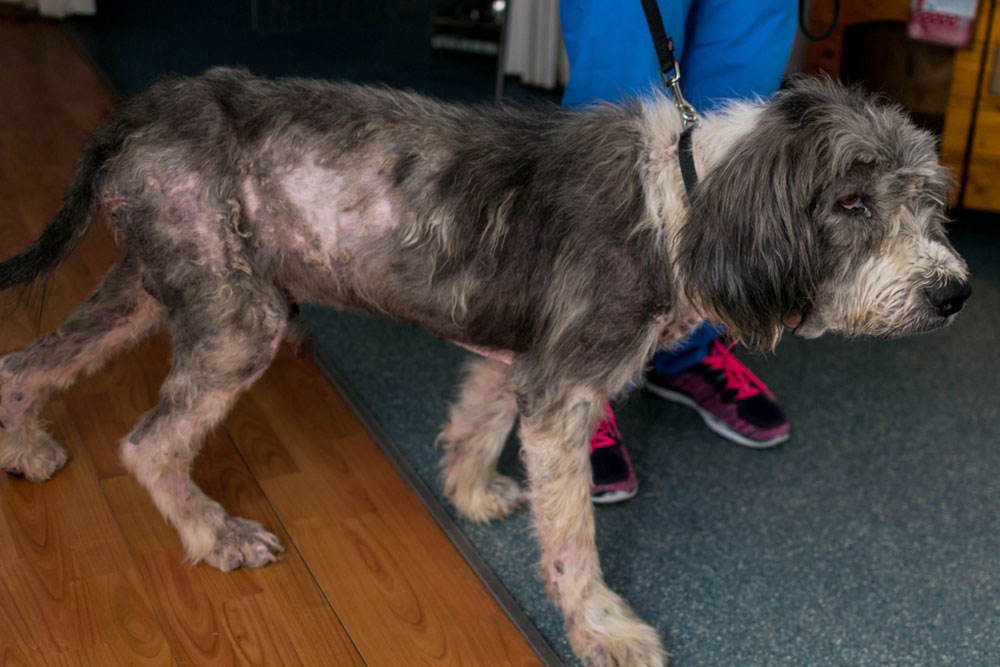
Every dog and cat sheds. That is completely normal, seasonally expected, and no cause for concern. What is worth a closer look is something more specific: actual bald patches, areas where hair is clearly missing or thinning in a focused way, or skin that looks red, flaky, or different in the area where the hair has gone.
Alopecia is the medical term for hair loss, and it is a symptom rather than a diagnosis. Something is causing it, whether that’s a skin condition, a parasite, a hormonal shift, or something behavioral, and identifying what that something is shapes everything about how treatment proceeds. Normal shedding leaves the coat looking thinner overall but full. Alopecia leaves visible gaps, patches where skin shows through, or hair that doesn’t grow back on the expected timeline.
Signs that warrant a veterinary evaluation rather than a wait-and-see approach:
- Bald patches or distinct areas of localized thinning
- Skin that looks red, crusty, scaly, or greasy underneath the hair loss
- Hair that has grown back with a different texture or color than before
- Excessive scratching, licking, or chewing focused on specific spots
- Hair loss that’s spreading or worsening over time
Our preventative care exams include a thorough skin and coat assessment as part of the full physical, which is often how we catch early changes before they progress to something harder to manage.
Allergies: The Most Common Culprit in South Carolina
One useful early question to consider before your appointment: is your pet actually itchy? Hair loss paired with significant scratching, licking, or chewing tends to point toward allergies, parasites, or skin infections. Hair loss without much itching often points toward hormonal conditions or, in cats, quiet overgrooming. Cats are skilled at grooming themselves when no one is watching, and an owner may have no idea until bald patches appear on the belly or inner thighs. Our Fear Free approach means your visit will include the unhurried history conversation that helps sort this out.
Allergies are the most frequent cause of hair loss and skin problems in dogs and cats, and in the warm, humid environment of Summerville and the greater Charleston area, they’re particularly prevalent. The region’s long pollen seasons, persistent flea populations, and year-round humidity create ideal conditions for allergic flare-ups.
Atopic dermatitis is the term for environmental allergies in pets, an immune system overreaction to airborne triggers like pollen, grasses, mold spores, and dust mites. Dogs with atopy typically show itching and hair loss on the belly, paws, armpits, and ears, often with recurrent ear infections as a companion problem. Allergies can also be triggered by specific food proteins, most commonly chicken, beef, dairy, or wheat, and diagnosing food allergy requires a carefully managed elimination diet rather than simply switching brands.
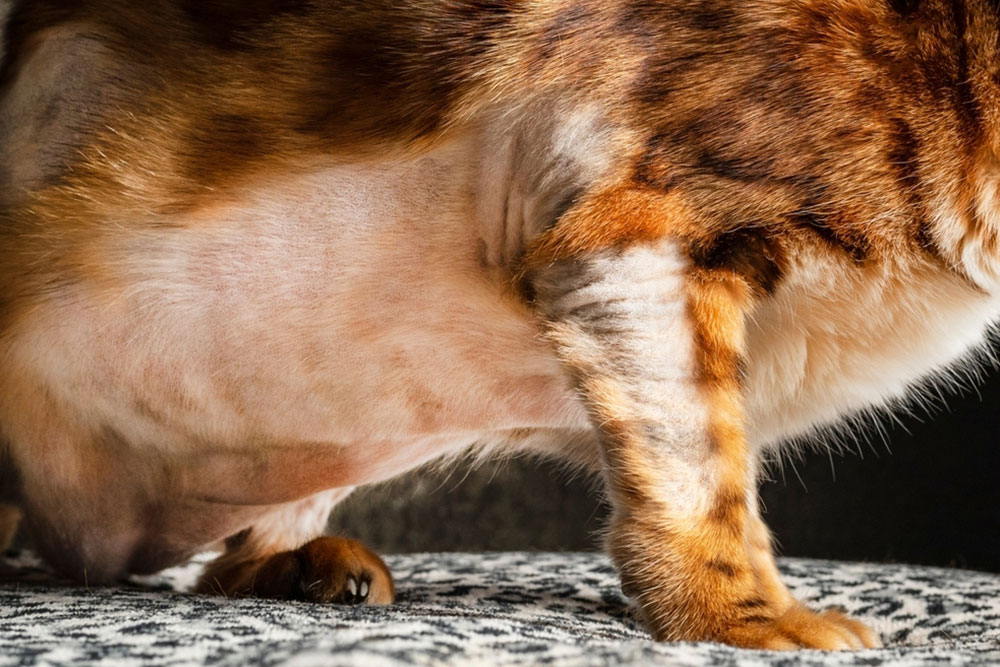
In cats, allergies frequently express as overgrooming rather than obvious scratching. A cat with environmental or food allergies may lick herself completely smooth along the belly and inner legs without the owner ever catching her in the act. The skin underneath often looks normal, which is part of what makes the pattern confusing.
Flea allergy is worth particular emphasis for pets in our area. Flea allergy dermatitis is an immune reaction to flea saliva, and it only takes a single bite to trigger a significant response in sensitized pets. The classic distribution is hair loss and intense itching over the rump, tail base, and inner thighs. Year-round flea prevention eliminates this trigger completely.
For pets with allergic skin, we love Duoxo Calm Shampoo and Duoxo Calm Mousse for gentle, soothing maintenance, and Relief Shampoo and Relief Spray also work great for comfort during flare-ups. These pair well with whatever systemic treatment plan we design for your individual pet.
Parasites and Skin Infections: Small Things, Big Impact
Even indoor pets are not entirely immune to skin parasites, and in South Carolina’s climate, the risk for outdoor and semi-outdoor pets is real year-round.
Mites are invisible to the naked eye but responsible for some of the more dramatic patterns of hair loss we see. Demodex mites live in hair follicles and normally coexist peacefully, but in puppies or immunocompromised pets they can overgrow, causing patchy hair loss on the face, around the eyes, and on the paws. This form doesn’t tend to be intensely itchy, which sometimes delays owner concern.
Sarcoptic mange, or scabies, is a different mite entirely and a very itchy one. Hair loss from sarcoptic mange typically appears on the ear margins, elbows, and belly, accompanied by crusting and relentless scratching. This mite is also transmissible to people, which is one more reason prompt diagnosis matters. Both types of mites require microscopic identification, which is why we don’t guess.
Ringworm is not a worm despite the misleading name. It’s a fungal infection that creates circular bald patches with scaly or crusty edges, most commonly on the face, ears, and forelimbs. It is contagious to other pets and to people, making accurate diagnosis and appropriate treatment a priority. Fungal culture takes one to two weeks for reliable results but is the standard method of confirmation.
Bacterial and yeast overgrowth frequently complicate the picture further. When skin becomes inflamed for any reason, normal surface organisms can proliferate and create a secondary infection that intensifies itching and accelerates hair loss.
We recommend year-round parasite prevention as a foundation for any pet’s skin health plan, eliminating flea-related triggers before they start. We carry flea and tick prevention for dogs and for cats in our pharmacy and are happy to help you find the right product for your pet’s lifestyle. Our diagnostic services include skin scrapings, cytology, and fungal cultures to identify exactly what’s present before we select treatment.
Hormonal Hair Loss: When the Pattern Is the Clue
When hair loss appears symmetrically on both sides of the body, along the neck, or at the tail base without significant itching, that pattern often points toward a hormonal or endocrine cause. These conditions develop gradually, which means owners sometimes adapt to the changes without realizing how significant they’ve become.
Thyroid and Adrenal Conditions
Hypothyroidism is one of the more common hormonal diagnoses in middle-aged and older dogs. When the thyroid gland underproduces its hormone, the effects show up throughout the body: weight gain despite no diet change, persistent low energy, intolerance to cold, and a coat that becomes progressively dull, thin, and slow to regrow. The hair loss tends to be symmetric and often appears first on the trunk and tail.
Cushing’s disease, or hyperadrenocorticism, involves excess cortisol production and looks quite different. These dogs develop a characteristic pot-bellied appearance, drink and urinate excessively, pant even in cool weather, and have skin that becomes thin and fragile. Hair loss develops along the flanks and belly. Cats more commonly develop hyperthyroidism, producing weight loss despite a good appetite, a rough and unkempt coat, and sometimes patchy thinning.
Sex Hormones and Topical Medication Exposure
In intact males, testicular tumors can produce excess estrogen and cause symmetrical hair loss along the flanks and rear. Intact females can develop similar patterns from ovarian cysts or hormonal fluctuations. Spaying or neutering typically resolves these hormonally driven changes.
There is also a less obvious source worth mentioning: owner topical medications. Estrogen and testosterone creams applied to human skin can transfer to pets through contact or licking. Pets can absorb these hormones and develop coat changes that mirror true hormonal disease. Covering application sites and washing hands before handling pets eliminates this exposure.
Why Routine Blood Work Matters for the Coat
Hormone imbalances often affect blood work values before they become visually obvious in the coat. Establishing baseline thyroid, organ function, and blood cell values during wellness visits gives us something meaningful to compare against when changes do appear. This is exactly why our annual early detection blood screening is a consistent recommendation for adult pets, not just those already showing symptoms.
Breed Tendencies Worth Knowing About
Some dogs inherit coat conditions that require management rather than cure, and knowing a pet’s breed helps frame realistic expectations.
| Condition | Affected Breeds | Key Features |
|---|---|---|
| Color dilution alopecia | Dobermans, Weimaraners, Italian Greyhounds | Thinning on diluted-color areas; skin fragility |
| Flank alopecia | Boxers, Bulldogs, Airedales | Seasonal bald patches on the sides; often self-limiting |
| Sebaceous adenitis | Standard Poodles | Scaling and hair loss from destroyed oil glands |
| Zinc-responsive dermatosis | Huskies, Malamutes | Crusting and hair loss around face and pressure points |
For these pets, the goal is not eliminating the condition but managing it well enough that the pet is comfortable and the coat stays as healthy as possible. Supportive skin care, appropriate nutrition, and sometimes supplementation are the main tools.
When Stress or Pain Is Driving the Grooming
Cats use grooming as a coping behavior. When life feels stressful, more grooming often follows, and when grooming becomes compulsive, hair loss follows. Psychogenic alopecia is hair loss driven by behavioral overgrooming, and the defining feature is usually normal-looking skin underneath. No redness, no scabs, just smooth bare skin.
Feline life stressors that commonly trigger overgrooming include a new pet or person in the household, a move, changes in routine, outdoor cats visible through windows, and conflict with other pets in the home. Addressing the stressor, enriching the environment, and sometimes medication support can break the cycle.
Dogs most commonly express this as a lick granuloma, a firm, often raw lesion that develops when a dog obsessively licks one spot, typically a wrist or ankle. What starts as mild irritation becomes a self-perpetuating cycle of lick, damage, itch, repeat.
Pain is a frequently overlooked driver. A cat with feline idiopathic cystitis, a painful bladder condition, will often lick the lower abdomen bare. A dog dealing with osteoarthritis may persistently lick the affected joint until the hair thins. The skin looks normal. The behavior is the signal. Request an appointment if your pet is overgrooming a specific area, especially if there have been any recent changes in their mobility or comfort level.
Diet, Grooming, and Coat Health
The skin and coat are among the first places to show nutritional shortfalls. Hair follicles need consistent protein, zinc, essential fatty acids, and biotin to produce healthy hair, and a diet deficient in any of these can result in a dull coat or slow regrowth. Regular grooming also matters: brushing improves skin circulation, removes dead hair, and distributes natural oils that protect the coat. Overbathing or harsh shampoos strip those oils and make hair more fragile. If nutritional factors come up during a workup, we’ll provide specific guidance tailored to your pet.
What the Diagnostic Process Looks Like
We know veterinary visits can feel stressful, which is why Cane Bay Veterinary Clinic is designed to reduce that from the moment you walk through the door. A hair loss workup starts with a thorough history conversation: when did it start, is the pet scratching or licking, and have there been any recent household changes or dietary shifts. From there we assess the pattern and skin appearance during a full physical exam, then move into in-house testing as indicated.
Skin scrapings identify mites, cytology evaluates for bacterial and yeast infection, fungal culture confirms or rules out ringworm, and bloodwork covers thyroid and adrenal function when a hormonal cause is suspected. When allergies are the leading possibility, elimination diets or environmental allergy testing round out the evaluation. Our diagnostics are built for efficiency so answers come back quickly and treatment can begin promptly.
Treatment Is Always Matched to the Cause
Because alopecia has so many potential causes, treatment is individualized to what the diagnostics reveal:
- Allergies: Anti-itch medications, prescription topicals, omega-3 support, dietary management, or immunotherapy
- Parasites: Targeted prescription treatment plus environmental management and ongoing prevention
- Skin infections: Antibiotics or antifungal medications guided by cytology and culture
- Hormonal conditions: Thyroid supplementation for hypothyroidism; specific medications and blood monitoring for Cushing’s disease
- Stress and pain-driven grooming: Addressing the root cause through enrichment, behavior modification, or pain management
- Nutritional gaps: Dietary adjustments and omega supplementation
Follow-up rechecks confirm regrowth and allow us to fine-tune the plan. Parasite-related cases often improve within four to six weeks; hormonal conditions can take three to six months once the underlying issue is controlled.
FAQs About Pet Hair Loss
How quickly will my pet’s coat grow back?
Parasite-related cases often improve within four to six weeks. Hormonal conditions can take three to six months after starting medication. Some genetic coat conditions may not fully normalize but do improve with supportive care.
Can I catch something from my pet’s hair loss?
Most causes of pet alopecia are not transmissible to people. The exceptions are ringworm and sarcoptic mange, both of which can affect humans. Prompt treatment for the pet and basic hygiene precautions protect the rest of the household.
When should I bring my pet in versus monitor at home?
If shedding is generalized and the skin underneath looks healthy, seasonal shedding is likely. Bring your pet in if you see actual bald patches, redness or scaling on the skin, persistent or spreading hair loss, focused licking or scratching, or any accompanying changes like weight gain, increased thirst, or low energy.
Can food cause hair loss?
Yes. Food allergies typically affect the face, ears, paws, and rear end. Diagnosing food allergy properly requires an eight to twelve week strict elimination diet using a novel or hydrolyzed protein, not simply switching to a different commercial brand.
Is seasonal shedding normal in South Carolina?
Some coat turnover during spring and fall is expected. What’s not normal is bald patches, hair that doesn’t grow back, or thinning concentrated in specific locations. If the shedding seems heavier than previous years or you’re noticing bare spots, that’s worth a conversation.
Getting Your Pet’s Coat Back on Track
Most cases of hair loss improve significantly once the right cause is identified and treated. The range of possibilities can feel overwhelming, but that’s exactly why a thorough diagnostic workup matters more than guessing. Whether your pet is scratching relentlessly, grooming quietly in private, or showing the kind of symmetric thinning that points toward something hormonal, there is a clear path forward.
At Cane Bay Veterinary Clinic, we approach every evaluation with the same commitment: unhurried, thorough, and as stress-free as possible for the pet going through it. If your dog or cat has been losing hair and you’re ready for real answers, contact us or request an appointment online. We’re here Monday through Friday and would love to help you figure out what’s going on.


Leave A Comment